Panama’s Qualified Investor Visa Just Changed: Here’s What It Means for Investors

Published on


Published on
If you’ve been eyeing a Panama property to secure residency, the rules just changed. As of September 16, 2026, new property still qualifies at $300,000, but resale now requires $500,000, and pre-construction buyers face a three-year limit. Panama Equity Real Estate breaks down what it means for you.
The good news? Less has shifted than the headlines suggest. Panama published Executive Decree No. 17 in the Official Gazette on September 16, replacing the rules that have governed the program since 2020. For most buyers, the path to residency is still wide open. What’s different is how much timing, deal structure and the choice between new and resale now matter.
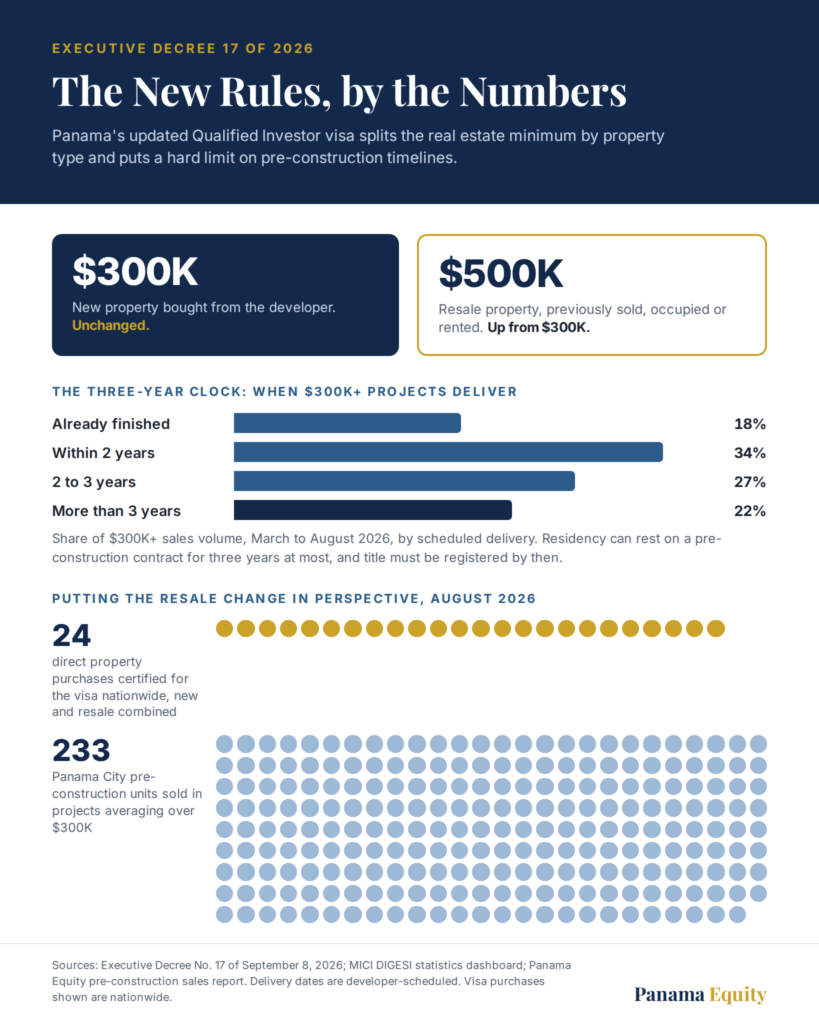
The headline change: the real estate minimum now depends on whether you buy new or resale.
The government has been clear about its reasoning. New construction creates more jobs than resales, so the decree is designed to steer foreign capital toward the building industry.
Buying off-plan now comes with stronger protections, and firmer limits:
Beyond real estate, the decree updates a few other requirements worth knowing:
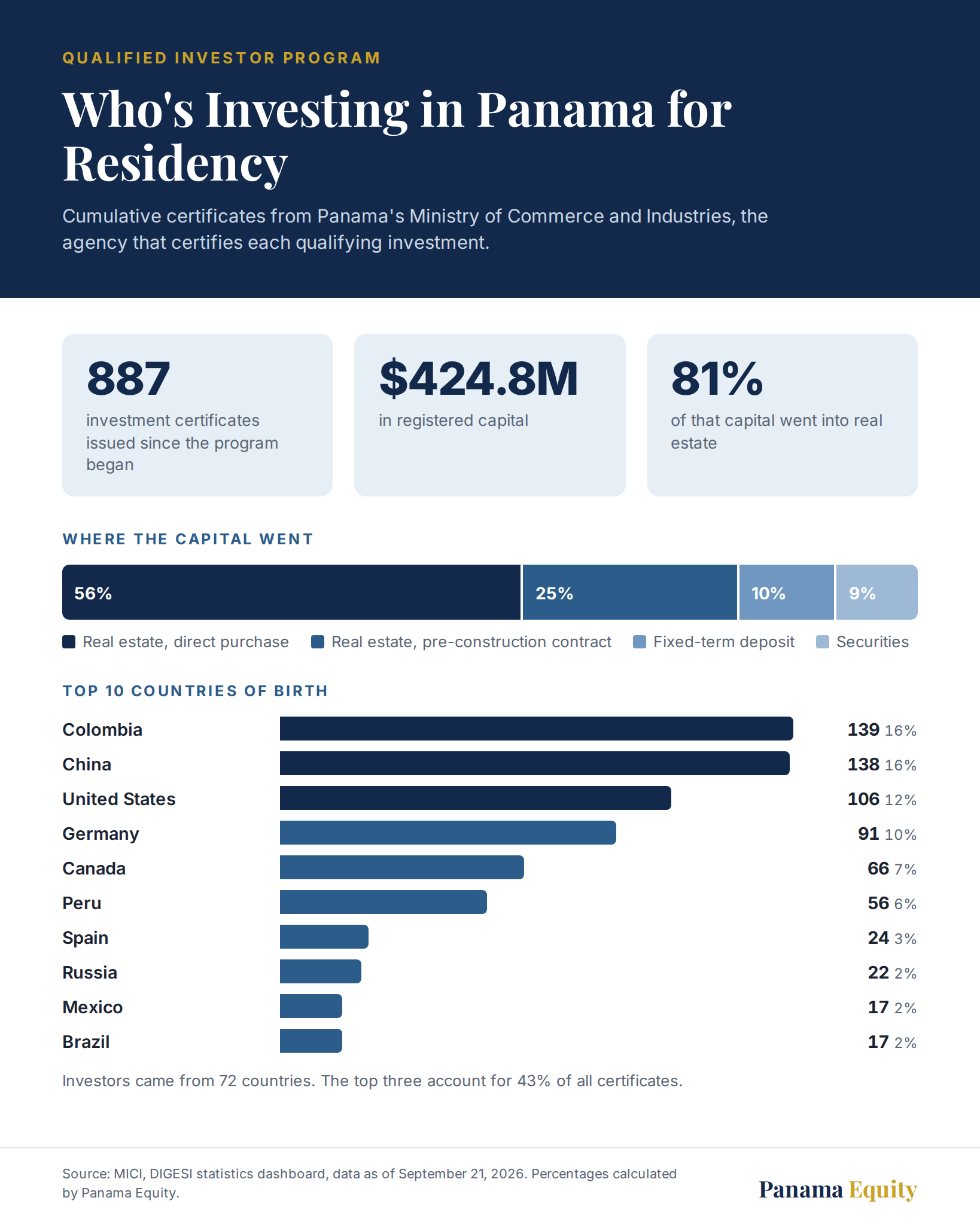
Plenty of what made the program attractive is still in place:
Already signed a contract? If you signed a binding contract before September 16, you may still qualify under the old rules, as long as you file within six months. That window closes around mid-March 2027.
It’s tempting to assume resale prices between $300,000 and $500,000 will drop now that those properties no longer qualify on their own. Panama Equity Real Estate sees it as more nuanced than that, for three reasons:
The effect Panama Equity Real Estate expects is narrower than the headlines imply:
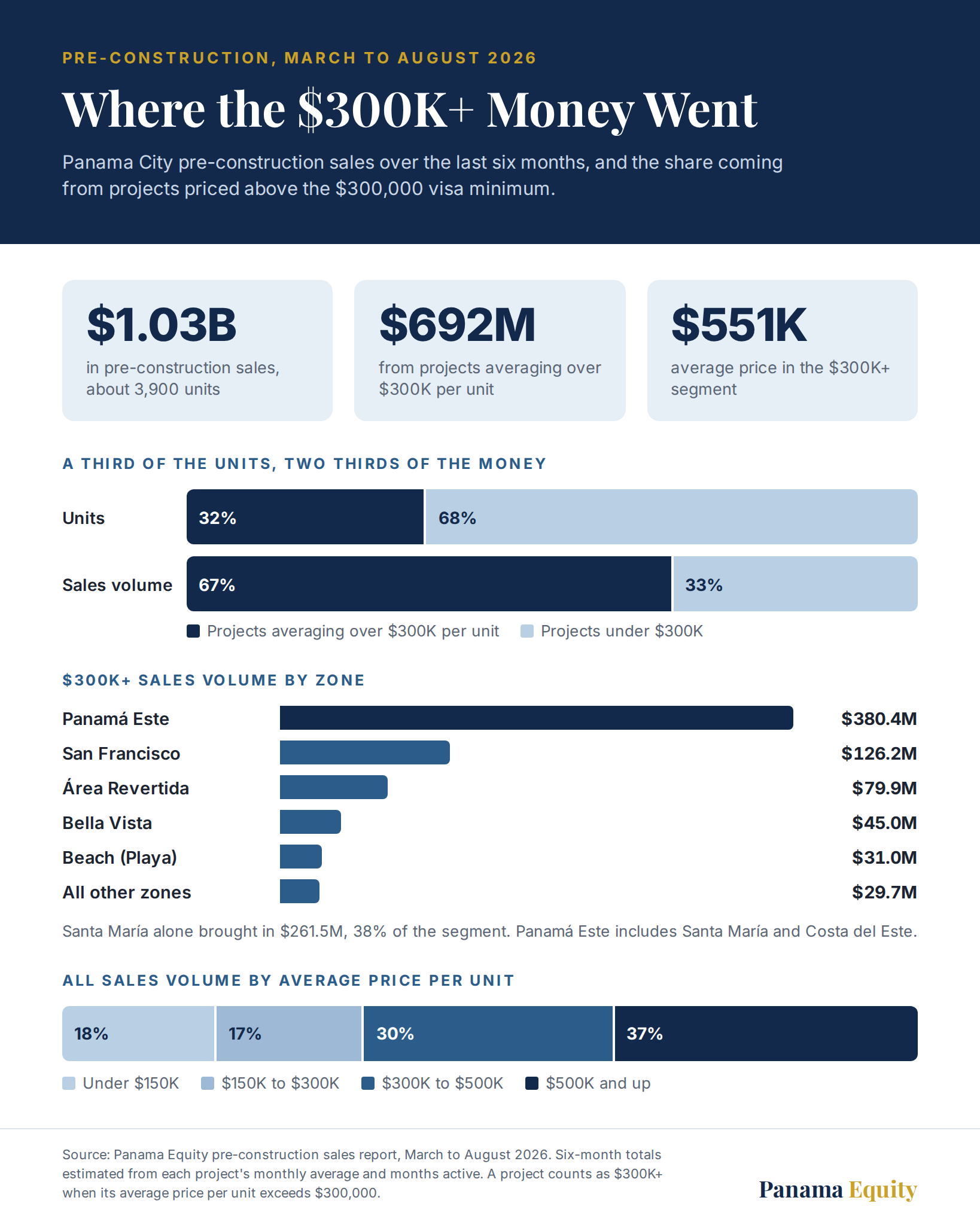
The quiet winner? Completed units a developer hasn’t sold yet. A finished unit that has never been occupied or sold still counts as new under the decree, so it qualifies at $300,000. Panama Equity Real Estate’s data shows finished buildings already make up a significant share of recent high-end sales, with 44 completed projects selling units averaging above $300,000 in the last six months.
Pre-construction is the program’s second most popular route after direct purchases, accounting for 232 of the 887 certificates issued to date. It’s also a big part of the market: projects averaging above $300,000 per unit sold about $692 million in Panama City over the past six months. The new three-year limit changes how you should think about delivery dates.
When does the clock start? Not the day you sign. It runs only while your residency depends on a pre-construction contract. By the end of those three years, the property must be finished and registered in your name. That means registered title, which usually trails completion by several months, not just a finished building.
Why does this matter? Several of the city’s best-selling projects aren’t scheduled for delivery until late 2029 or 2030. That isn’t a deal-breaker. A buyer who signs today and applies in about two years can still land inside the three-year window if the building delivers on schedule. The trade-off is that your money is tied up for those two years before you have residency. To compare projects and delivery dates, browse Panama Equity Real Estate’s pre-construction developments in Panama.
The decree adds a safety net, but it has limits:
Under the old rules, a developer delay was mostly an inconvenience. Under the new ones, it can cost you your residency. Local market knowledge is now part of the investment itself, not a nice-to-have. A well-informed agent should be able to tell you:
What your backup plan is. Before you sign, know which investment you’d switch to if the project stalls, and how quickly you could make that move.
Your immigration attorney handles the application. Your agent sees the market. The best outcomes happen when the two work together from day one. Meet the team at Panama Equity Real Estate.
The full impact of the decree will take time to play out. Here’s what Panama Equity Real Estate is keeping an eye on:
Rule changes like this can feel unsettling, especially if you’ve been planning a move or an investment for months. But for the right buyer, Panama’s Qualified Investor Visa is still one of the most attractive residency paths in the region, and $300,000 still gets you in the door with new property.
The difference now is that the details matter more: which property you choose, how you structure the payment and whether your developer delivers on time. Getting those right is exactly where local expertise pays off.
Whether you’re weighing a new build, a resale or a pre-construction unit, the Panama Equity Real Estate team is happy to walk you through your options, share which developers have a track record of delivering and help you build a plan that keeps your residency on track. Contact Panama Equity Real Estate today to start the conversation.
 English
Owning a home is a keystone of wealth… both financial affluence and emotional security.
Please enter the 6-digit OTP sent to your email.
Time remaining: 05:00

