Panama City Real Estate Market Update: Where Prices Are Actually Rising in 2026

Published on

Published on
Quick Summary
- Panama City’s market is K-shaped: new construction and well-managed newer buildings are rising in value; older, amenity-poor properties are largely flat.
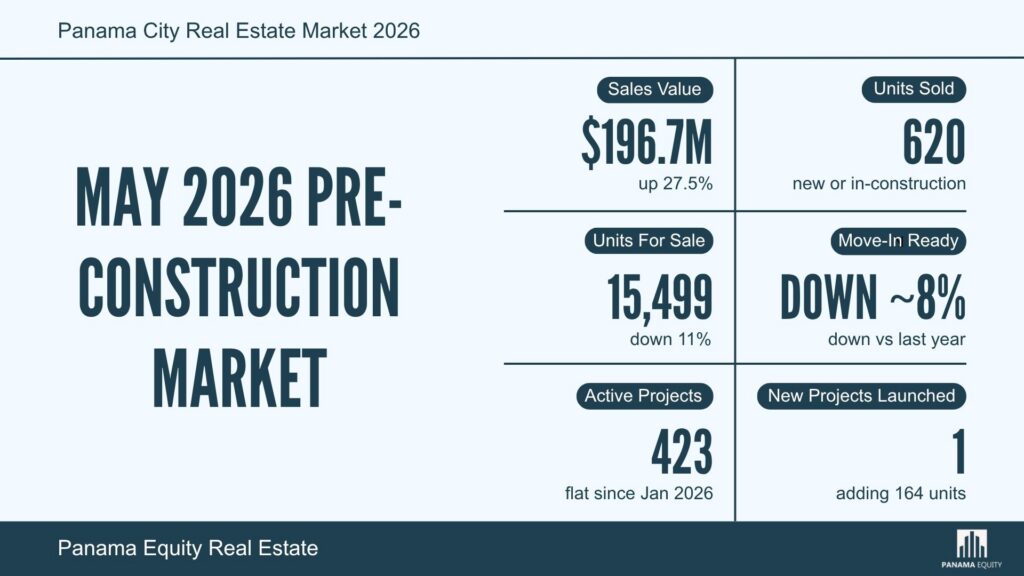
- New-construction sales hit $196.7M in May 2026 (+27.8% YoY), even as available inventory fell 11% and completed inventory fell 8%.
- The $300K–$400K segment is the strongest performer, tied to Panama’s $300K residency-by-investment threshold — sales more than doubled YoY in May 2026.
- Best appreciation potential: early price releases on a shortlist of developments.
- Rents continue to rise nearly across the board, with stronger gains in buildings less than 15 years old
- Resale gains remain highly selective by building, price range and timing.
After nearly 19 years of living in Panama and working in the real estate business, I can tell you that the market feels busier today than it has in a very long time.
We are well into July, traditionally part of Panama’s slower season, yet the inquiries have not slowed down much. Tourism remains strong, buyers are arriving by the planeload, and developers continue launching projects at progressively higher prices.
But that does not mean every property in Panama City is appreciating.
The market is moving upward, but it is not moving upward evenly.
New construction is setting higher price benchmarks. Newer buildings with strong rental demand are beginning to benefit. Meanwhile, many older properties with dated interiors, limited amenities and unrealistic sellers remain relatively flat.
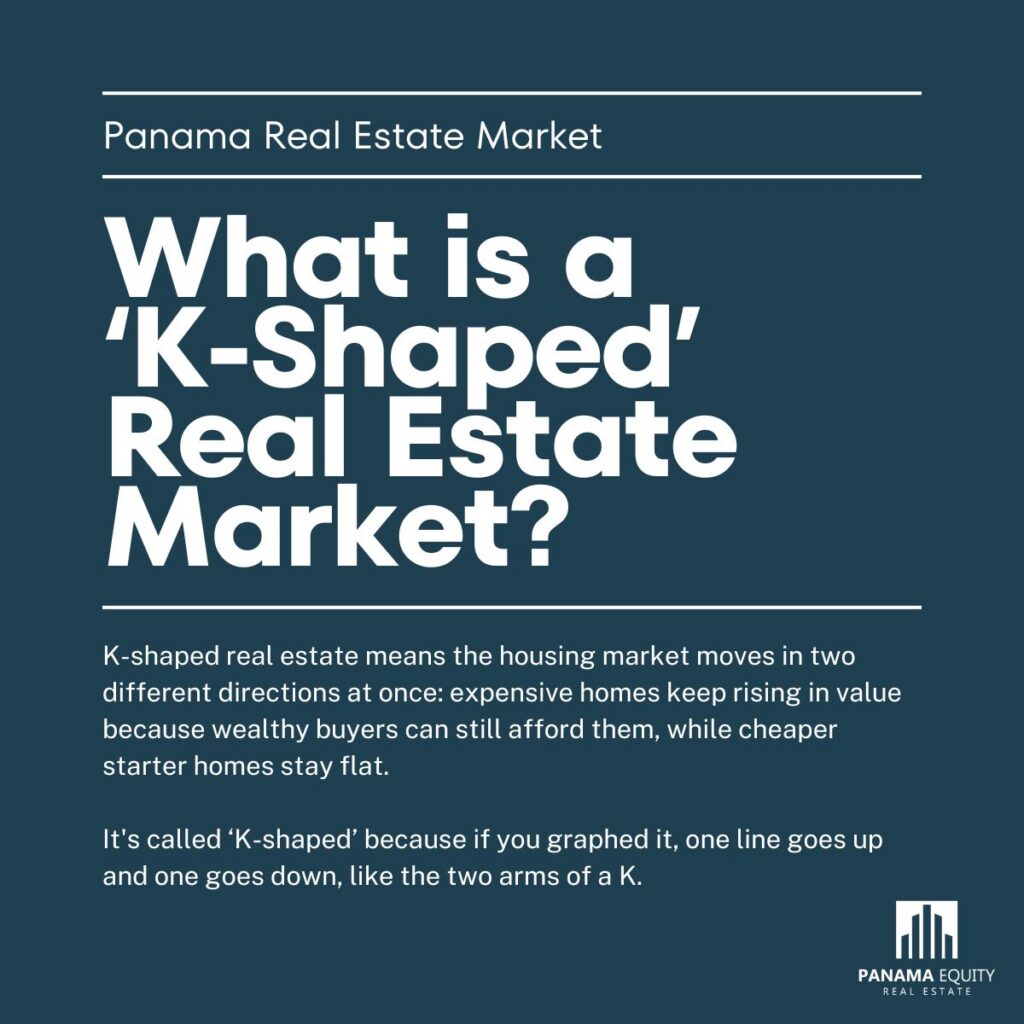
In other words, Panama City currently has something resembling a K-shaped real estate market. One part is moving up quickly. Another is moving sideways.
Understanding which side of that market you are buying into may be more important than deciding whether the Panama real estate market is, in general, is going up or down.
This report is not intended to cover every property in Panama or even every property in Panama City.
We are focusing on the portion of the market that attracts most of our international clients:
This is primarily an internationally oriented market. It is influenced by foreign buyers, relocating families, investors, retirees and people purchasing property as part of a longer-term residency or tax-planning strategy.
It should not be confused with the entire Panamanian housing market, where local financing, affordability and household income play a much larger role.
Watch the video below for a better understanding of the Panama City real estate market in 2026, including the key trends shaping the market and what buyers need to know today.
My conversational answer is yes; the market is rising.
A substantial number of people are buying Panama real estate right now, including people who do not plan to move here immediately.
Some are planning a future retirement. Others see Panama as a Plan B. Some are looking at residency or territorial-tax benefits. Others simply want to own an asset in a stable, dollar-based country with international air connectivity.
Panama’s Qualified Investor program currently allows qualifying foreign investors to pursue permanent residency through an investment of at least $300,000 in Panamanian real estate, including certain purchases made through a promise-to-purchase agreement. Buyers should obtain independent immigration and legal advice because the requirements extend well beyond simply buying a property.
The government is also actively promoting Panama internationally as an investment destination, including its residency-by-investment programs.
That demand is allowing developers to:
However, this does not mean the entire resale market is appreciating at the same rate.
A more precise description would be:
Panama City is being repriced upward, but actual resale appreciation remains highly selective.
You can have a look at some of the property for sale in Panama that we here at Panama Equity Real Estate have listed to give yourself an understanding of where the market is currently sitting.
The Panama Real Estate Market is becoming K-shaped and the upward side of the K is being led by new construction.
Developers are launching at higher prices and increasing those prices as projects move from an early release into public sales, construction and eventual delivery.
The flatter side of the K consists largely of properties more than 15 years old, particularly those with:
Two properties can sit within a few blocks of each other and experience completely different results.
One may be located in a modern, well-managed building with a strong mix of residents and tenants. The other may be larger and less expensive per square meter but struggle because of dated common areas, deferred maintenance or limited rental demand.
Location still matters, but location alone no longer explains the full difference in value.
The Panama real estate market is complicated, so we’ve broken it down into the risks, pricing and what buyers need to know to help keep you informed, which you can read here.
The latest housing data gives us a clearer picture of what is happening beneath the headlines.
In May 2026:
That combination is important. Buyers purchased fewer units than they did in May of last year, but they spent considerably more money. At the same time, both total available inventory and completed inventory continued to decline.
Panama is not running out of property, but the direction of inventory has changed. As of May 2026, developers had approximately 15,499 new units available for sale, about 11% fewer than one year earlier. Completed inventory, meaning homes that are already finished and available for delivery, was also down by approximately 8%. This means that developers are in most cases able to sell out well before a building is completed.
This matters because buyers have fewer finished units to choose from, particularly in the locations and price ranges that are attracting the most demand. It also helps explain why developers are less inclined to negotiate aggressively on their strongest projects, even while weaker developments continue to offer incentives.
Developers have several factors working in their favor:
A typical pre-construction payment structure may require approximately $5,000 to reserve a unit, 10% when the contract is signed, another 20% during construction and the remaining balance at delivery.
That is especially appealing to someone living abroad.
The buyer can lock in today’s price, pay over time and potentially receive a brand-new property that is more modern than much of the existing inventory available in that neighborhood.
It is also easy to buy remotely. Buyers select a floor plan, review a finish package (if available), sign a standardized contract and make scheduled payments without having to visit dozens of existing properties.
That convenience carries a premium.
Many foreign buyers perceive new construction as the safer option.
They are buying from a company rather than an individual seller. The unit has never been occupied. The kitchens, bathrooms and common areas tend to be more modern. Buyers assume there will be fewer repairs and that a new property will be easier to rent and resell.
Some of those assumptions are absolutely correct. And in some cases, a well purchased pre-construction property with a low base price and several years of price increases before delivery can yield even better than a comparable older property.
But foreign buyers should also be prepared for a bumpy start to ownership.
New buildings frequently experience problems during their first months of operation. Air-conditioning systems, elevators, swimming pools, under-equipped gyms and lobbies, water pressure, access controls and other components almost always require adjustments after residents begin moving in.
Nuovo by Armani/Casa, for example, experienced well-known operational difficulties involving air-conditioning systems during its early years. Those issues affected rental demand and contributed to a wave of competing rentals and resales before conditions began stabilizing.
Another risk appears when most of a building is sold to investors.
If dozens of nearly identical units are delivered at the same time, owners can find themselves competing against one another for the same tenants. Instead of rents immediately reaching the level projected during presales, landlords begin discounting to secure occupancy.
The result can become a race to the bottom.
Developer risk can also emerge late…
A company may have successfully delivered several previous buildings but become overextended after launching too many projects at once. Financial trade-offs begin to appear, quality declines, and the builder’s problems may only become visible one or two years after delivery.
Past success matters, but it is not a guarantee.
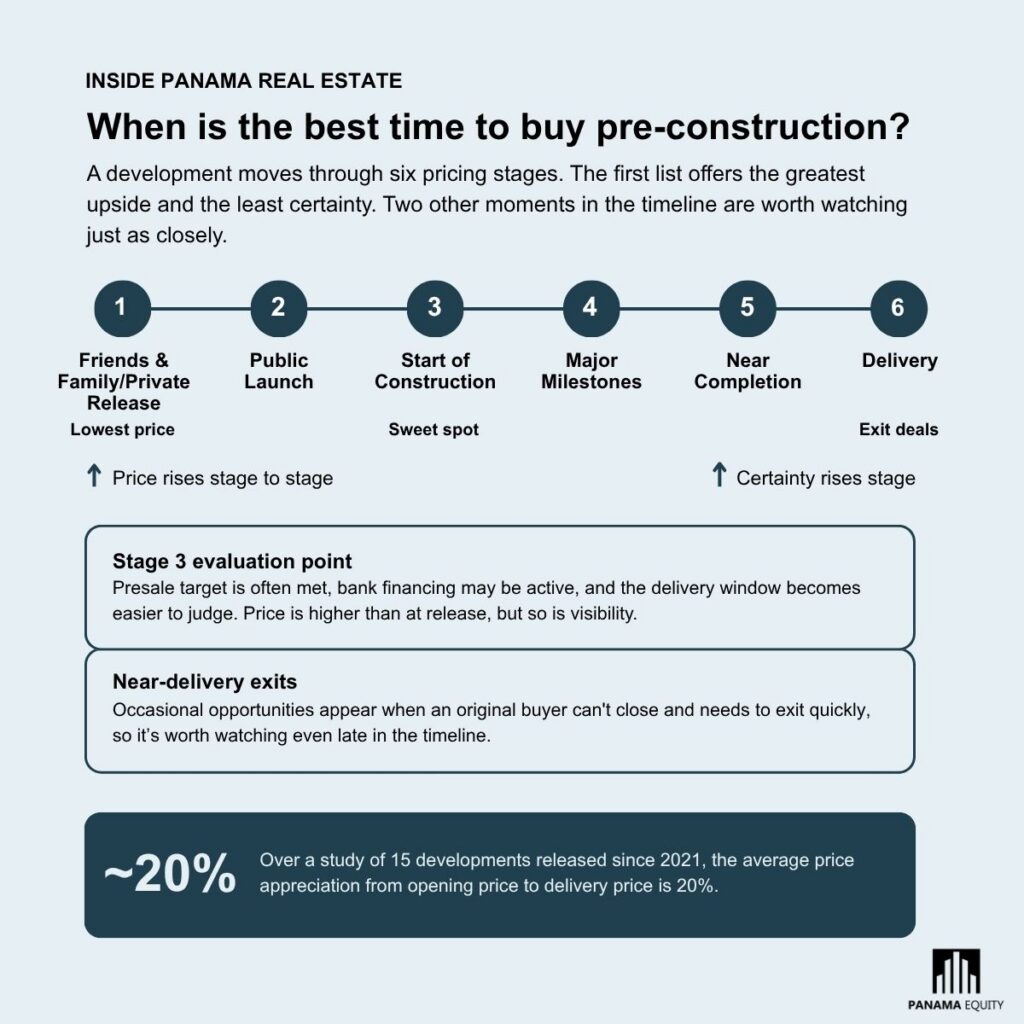
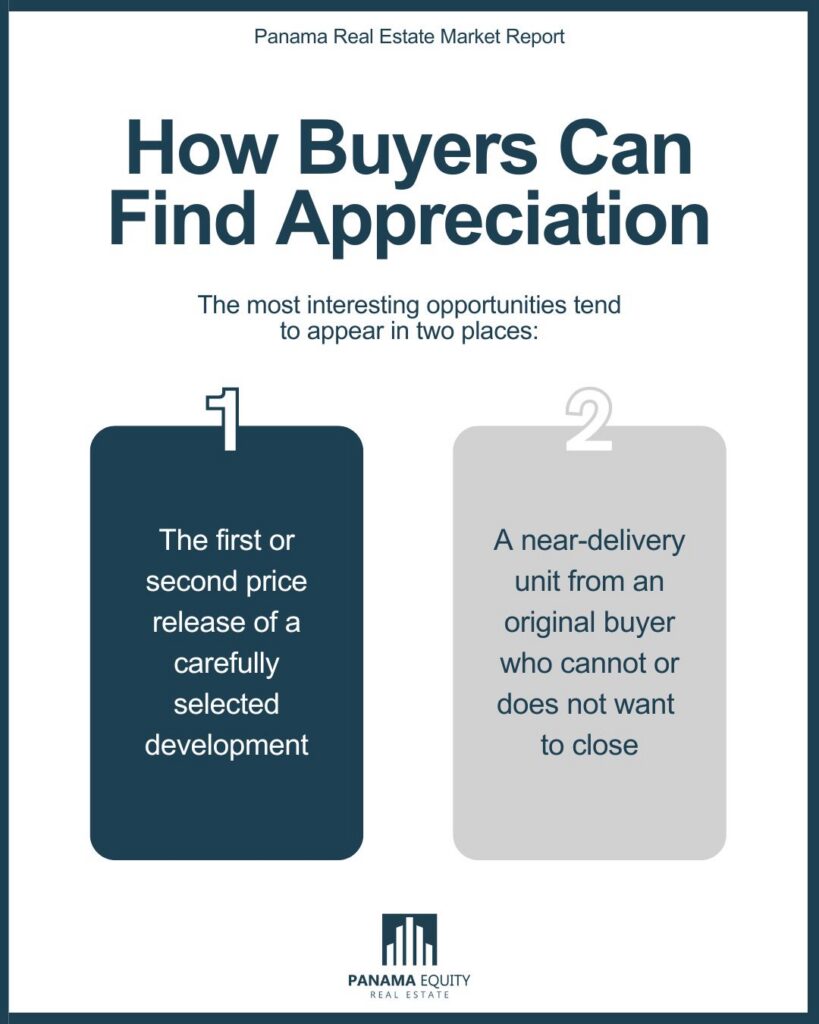
The first price list normally offers the greatest potential upside, but it also comes with the least certainty.
A development usually moves through several pricing stages:
The friends-and-family release is, almost without exception, the the lowest possible purchase opportunity.
However, one of the most useful moments to evaluate a project may come shortly after real construction begins. At that point, the project may have reached its presale target, bank financing may have activated, and the probable delivery window becomes easier to evaluate.
The price will likely be higher than it was during the private release, but the buyer has more visibility.
Occasionally, opportunities also appear near delivery when an original buyer cannot close and needs to exit quickly.
Early purchasing can produce meaningful appreciation, but only in the right development.
I would estimate that perhaps 20% of the Panama City projects we review could make sense for an early-stage investor. That does not necessarily mean the other developers are bad. A project may simply be at the wrong stage, in the wrong location, priced too aggressively or inappropriate for that particular buyer.
Before delivery, buyers often focus on renderings, construction progress and the developer’s next price increase.
After delivery, the property enters a different Panama City real estate market.
It must now compete based on:
The property does not necessarily lose value.
However, it may not continue appreciating at the same pace it experienced between its first price list and delivery.
The buyer pool can also become smaller. The installment period is over, the full purchase price is due, and investors can now compare projected returns with real operating results.
The premium price established by the developer becomes the market’s new benchmark, but the resale market must prove that buyers are willing to pay it.
Not automatically. But in some cases, absolutely.
New condos are often easier to rent and easier to market for resale. They photograph well, are familiar to foreign buyers and usually offer the types of amenities today’s more well healed tenants are looking for.
But buyers also pay a significant premium for those advantages.
A 10 to 20-year-old resale in some cases may offer:
For an owner-occupant, an existing property may also provide a better quality of life. Many older condos have larger kitchens, proper laundry rooms, bigger bedrooms, more storage and fewer apartments per floor.
The correct answer depends on what the buyer values:
The biggest mistake is believing the developer’s appreciation or rental forecast without testing it.
The second is ignoring how much competing inventory will be delivered at the same time.
Beautiful renderings do not establish market rent.
Neither does an amenity list.
Many new developments include amenities that look impressive during the sales process but add limited rental value because few residents use them.
Pools, coworking areas and well-designed common spaces can help. But cinemas, audiovisual rooms, oversized event areas and highly specialized amenities may increase maintenance expenses without materially increasing rent.
Investors must ask what tenants will actually pay more to use.
Why Is Gross Yield Not the Same as Net Yield in Panama City Real Estate?
Rental returns in Panama are frequently marketed using gross yield.
Gross yield is calculated as:
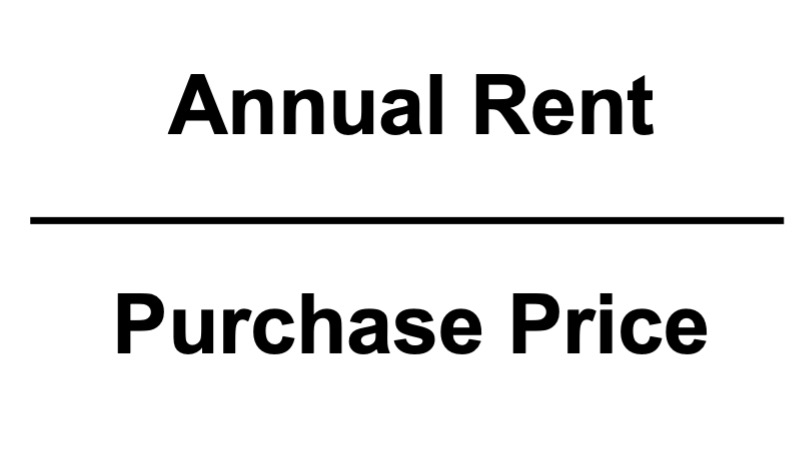
For example, a property renting for $2,000 per month generates $24,000 per year. If the purchase price is $300,000, the gross yield is 8%.
But that is not the owner’s return.
A realistic net calculation for a property in Panama should consider:
Some advertised ‘net’ returns do not even deduct property management, rental commissions or vacancy. Ours do.
Buyers should ask for every assumption and expense behind a projected return rather than relying on the percentage printed in a brochure.
Our internal review of approximately 25 active El Cangrejo listings illustrates the divergence occurring within individual neighborhoods.
New and pre-construction buildings with extensive amenity packages were listed at an average of approximately $2,760 per square meter.
Buildings roughly 10 to 20 years old with partial amenity packages averaged approximately $1,800 per square meter.
Older buildings with minimal amenities averaged approximately $1,524 per square meter.
That creates an approximately 81% asking-price gap between the newest amenity-rich inventory and the oldest buildings, even though many sit only a few blocks apart. But remember, older buildings rent more slowly, appreciate less, and may not be as liquid as newer properties.
| Tier | Description | Representative buildings | Average asking price |
| A | New or pre-construction with full amenities | Luxor 400, Luxor 500, Van Gogh, Amara, LOV Cangrejo | $2,760/m² |
| B/C | 10–20 years old with partial amenities | Luxor 300, Vitro Loft, Cangrejo Bay, Onyx Tower, PH Miró, Zaphiro, Velure | $1,800/m² |
| D | Older buildings with minimal or no amenities | Setton Place 32, Aurora Tower, Andaluz, PH Del Caribe, Devalor | $1,524/m² |
The rental premium is not nearly as wide as the purchase-price premium.
| Building | Tier | Approximate unit size | Monthly asking rent | Approximate rent per m² |
| Luxor Tower | A | 158.3 m² | $1,850 | $11.69 |
| Van Gogh | A | 79–94 m² | $1,350–$1,500 | $16.50 |
| Luxor 400 | A | 90–120 m² | $1,700–$2,300 | $21.00 |
| Cangrejo Bay | B/C | 125 m² | $1,350 | $10.80 |
| PH Dali | B/C | 105 m² | $1,400 | $13.30 |
| PH Kubic | B/C | 99 m² | $1,400 | $14.14 |
| Older no-amenity units | D | 74–80 m² | $700–$900 | Approximately $10.00 |
Based on this limited sample, the middle category currently appears to offer the strongest gross yield.
| Tier | Average sale price | Average monthly rent per m² | Indicative gross yield |
| New with full amenities | $2,760/m² | $14.40 | 6.3% |
| 10–20 years old with partial amenities | $1,800/m² | $12.75 | 8.5% |
| Older with few amenities | $1,524/m² | Approximately $10.00 | Approximately 7.9% |
This should not be treated as a universal rule for Panama City, nor even for El Cangrejo, as vacancy/time on market is not taken into consideration.
This is an El Cangrejo snapshot based primarily on active asking prices, not a complete database of closed transactions. Furnishing, unit size, parking, condition and negotiability also affect the results.
But it reveals an important possibility:
Buyers may be paying far more for newness than tenants are willing to pay in additional rent.
See current listings in El Cangrejo.
Based on our internal review of new-development activity, the $300,000 to $400,000 category is currently one of the strongest segments of what is selling in Panama city.
Several factors appear to be supporting it:
In fact, sales of new and under-construction condos in this category more than doubled in June 2026 (104) compared with the same month one year earlier (42).
As of June 1st, 2026 there are a total of 84 developments listed as having condos for sale between $300,000 and $400,000.
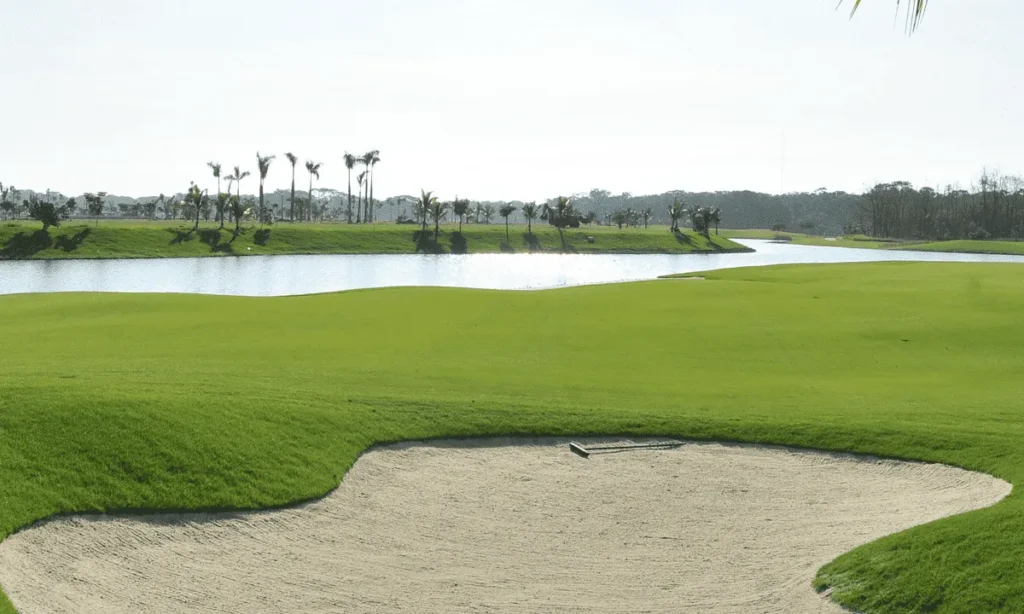
Santa María is attracting wealthy foreign retirees, active expats and families looking for a high standard of living with minimal culture shock.
Many are buying newer two-bedroom condos, although the neighborhood also remains one of the city’s strongest markets for large existing homes and apartments.
Santa María feels familiar to buyers arriving from affluent suburbs in Florida, Texas, California or Canada. It offers controlled access, golf, modern infrastructure, international schools and relatively easy access to both Tocumen International Airport and downtown Panama City.
Recent sales figures received an additional boost from the opening of Santa María’s next development phase and several successful project releases for a total of 110 condos and a total of 70 million dollars sold last month.
That created a spike rather than necessarily establishing a permanent monthly pace. New developments frequently sell 10% to 20% of their inventory rapidly at launch before entering a slower march toward completion.
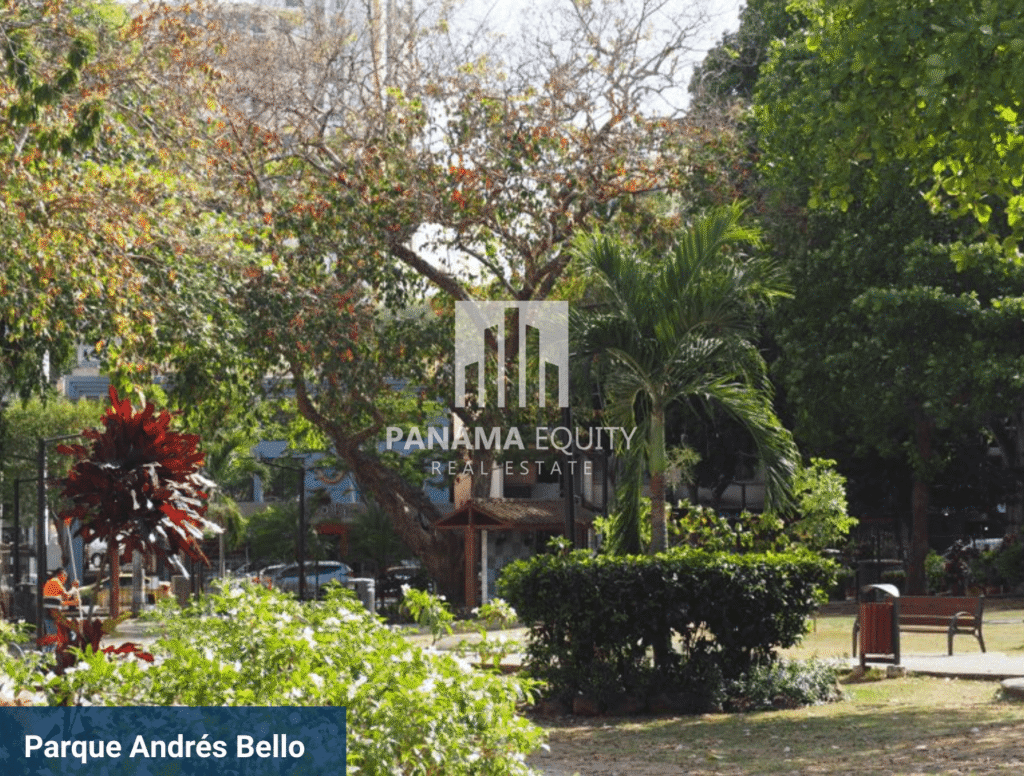
El Cangrejo attracts middle- and upper-middle-income foreign buyers who want to feel as though they are genuinely living in Panama.
They are often looking for two and three bedroom apartments within walking distance of restaurants, cafés, parks and the Metro.
Rental inventory is especially tight for furnished apartments below $1,300 per month.
The neighborhood has plenty of older inventory but relatively few newer upscale buildings, creating a noticeable gap between what many foreign buyers want and what is currently available, which is why we still like pre-construction for this area.
Casco Viejo and nearby Santa Ana attract investors interested in short-term rentals, hospitality and long-term neighborhood transformation.
Other buyers simply want a small place in one of Panama’s most culturally significant areas.
The central investment thesis is scarcity. The historic district cannot be replicated and the number of properties available for redevelopment is inherently limited.
However, building condition, legal status, restoration costs, short-term-rental permissions and micro-location can make an enormous difference from one property to another.
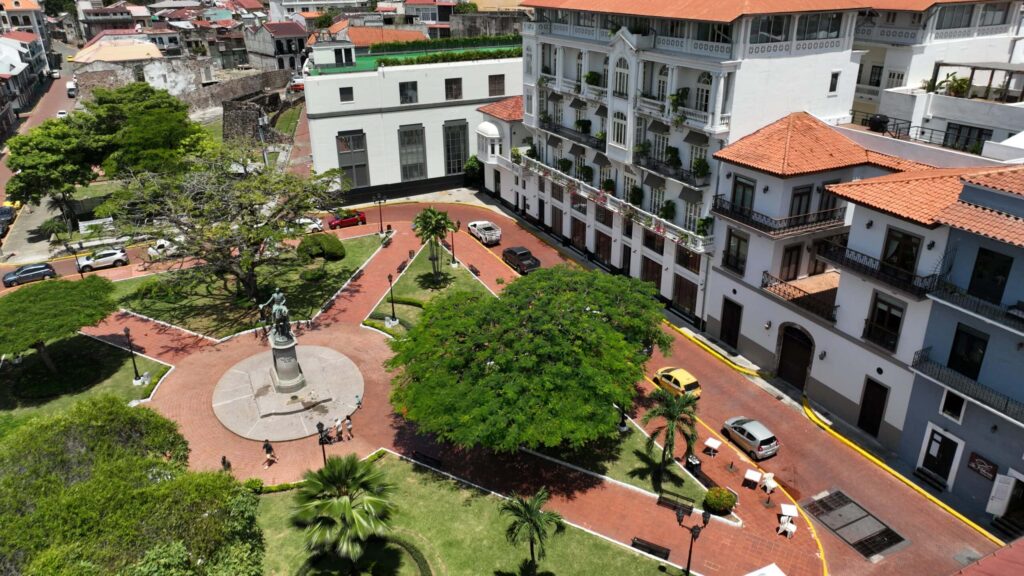
Through June 2026, Panama Equity’s internal data showed approximately 180 sales of new and under-construction condos in El Cangrejo, with a total of 680 condos for sale that are in pre-construction and/or new and delivered.
Most of that sales activity was concentrated in a small number of developments, including Luxor 500, LOV and Amara.
Many of the neighborhood’s new units are relatively compact. Luxor 500 has been one of the few projects combining newer upscale construction with a meaningful selection of apartments above 1,000 square feet.
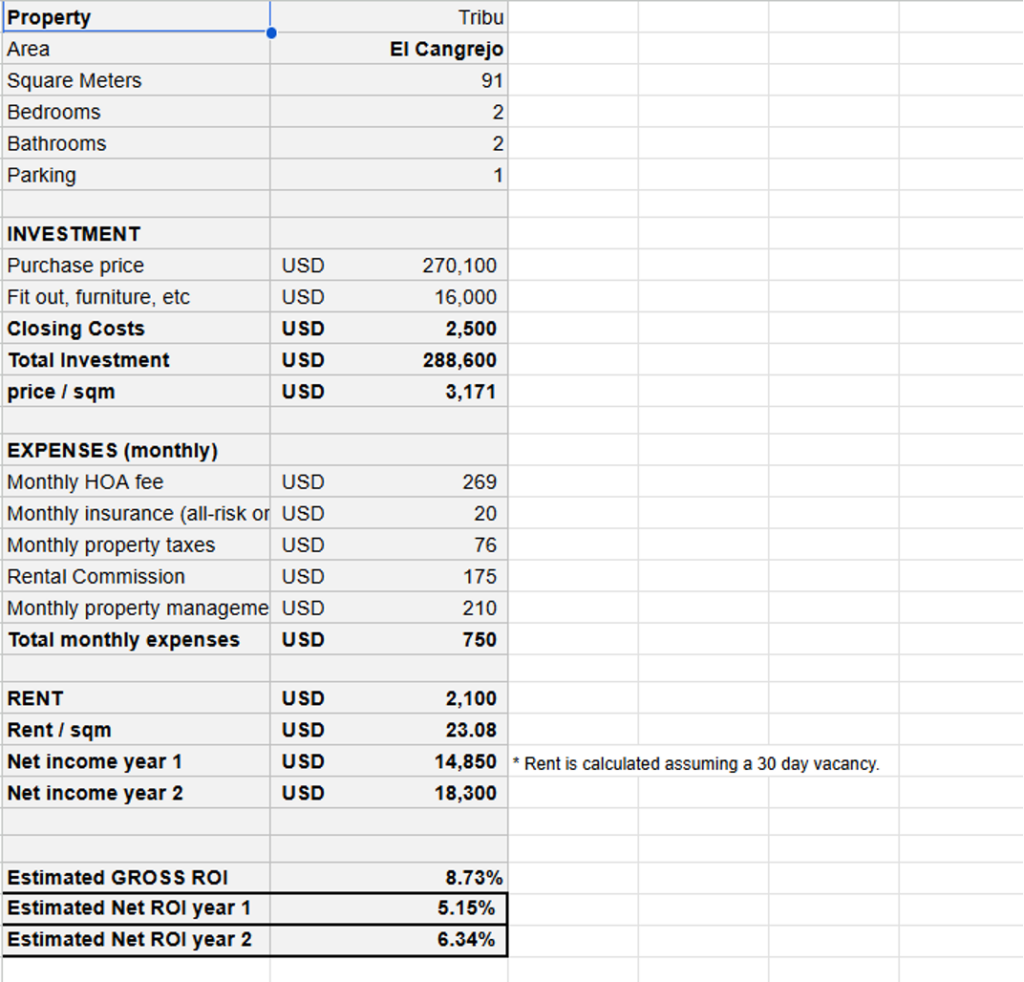
Tribu El Cangrejo is entering that gap.
The project is being developed by a multigenerational firm with more than 20 years of building in Panama City and at the beach.
What I like about Tribu is the combination of:
Below, a sample proforma on Tribu El Cangrejo.
Two years ago, Brian Wagner, the developer of the 136-unit Casco View building on 16th Street, had a problem.
He was too early.
Brian came into Casco almost two decades ago and selected a building site that was still five blocks from the center of the historic district. He did like most developers in Panama do: he launched presales, sold enough to start construction and plowed ahead to delivery, which came in 2024.
His problem was that by the time construction finished and he was ready to deliver condos, he still hadn’t sold out. In fact, he was sitting on over 40 unsold units. The market was resisting because the neighborhood’s actual ‘progress’ hadn’t caught up yet to his ‘path of progress’ bet.
By then, La Manzana had already opened on the corner. Several nearby projects from some of Casco’s most prominent developers had also launched, bringing more restaurants, hospitality, events and activity to the neighborhood. Still, the area hadn’t matured enough to attract the development’s final wave of buyers.
So, what did he do?
He decided to take many of the remaining units off the market, obtain a license for short-term rentals and begin transforming Casco View into a wellness-focused hospitality experience. At the same time, he started offering short-, mid- and long-term rentals to prove a concept he had been pitching to buyers all along: Casco View was more than viable. It was the future.
The result?
The best 12 months of sales in the history of the development. A nearly sold-out project, mostly to investors who are seeing 6%+ net returns based on solid rental history. And most importantly, short-term tenants who are converting to long-term tenants and, eventually, owners in the building.
Today, the building is self-managed, and that hospitality concept continues to evolve with plans for a state-of-the-art wellness center featuring cold plunge therapy, infrared sauna, hyperbaric oxygen therapy, IV therapy, recovery experiences and other wellness-focused amenities.
So, what started as ‘close to Casco and less expensive’ became a wellness-focused hospitality destination and a proven operating model, all because of market conditions and some creative repositioning. Not to mention a clever refinancing strategy using the new Casco incentives to reduce holding costs and improve returns for the original development group.
What does that mean for the greater market?
It means sometimes you can get in too early. It means what you buy today may not always be the final concept if the developer has to pivot. But it also means that, with a committed builder and a savvy operator, returns can meet, and in this case, exceed expectations.
For buyers wanting appreciation, the opportunity appears to be returning selectively to the pre-construction market.
Not across every development.
Not simply because a brochure promises annual price increases.
Sky Parc 1 in Costa del Este provides an example.
One Panama Equity client purchased units from the 2021 price list at $128,000, placing a combined $36,000 down. Today, those units are being sold for $160,000. The headline difference is $32,000 per unit.
However, that should not automatically be described as a completed $32,000 profit. The final return in this case, including commissions is going to be around $25k profit on $36k down over 4 years. That’s a 70% return over 5 years. Not too shabby!
We become cautious when we see:
For an early-stage investment, we generally prefer:
A project supported only by speculative investors is much more fragile than one that also appeals to end users.
Not sure if a project passes this checklist? Ask our team!
I normally recommend renting first when:
Living in a neighborhood reveals things that a showing cannot: noise, traffic, walkability, humidity, sun exposure, building administration, elevator congestion and how the area feels at night or on weekends.
Buying before living in Panama can still make sense when the purchaser:
You can browse our listings of Panama real estate for rent see what’s available. If you’d prefer to speak with someone in person, be sure to get in touch with one of our experienced Panama City real estate agents.
For a desirable new development that is selling well, waiting 12 months will probably mean paying more.
That is especially true if you are considering:
Waiting may be smarter if you don’t know Panama, if you have doubts about the developer, cannot validate the projected rent or are being pressured to purchase simply because a salesperson says the price is about to increase.
Paying more later can be better than buying the wrong property early.
I’m liking a lot of the numbers right now.
Panama recorded a 16.4% increase in international visitors during the first four months of 2026, while tourism revenue rose by 15%. Hotel occupancy monitored in April stood at 66%.
That matters because tourism is often the first stage of Panama’s real estate funnel. People visit, return for longer stays, begin exploring residency and eventually consider purchasing property.
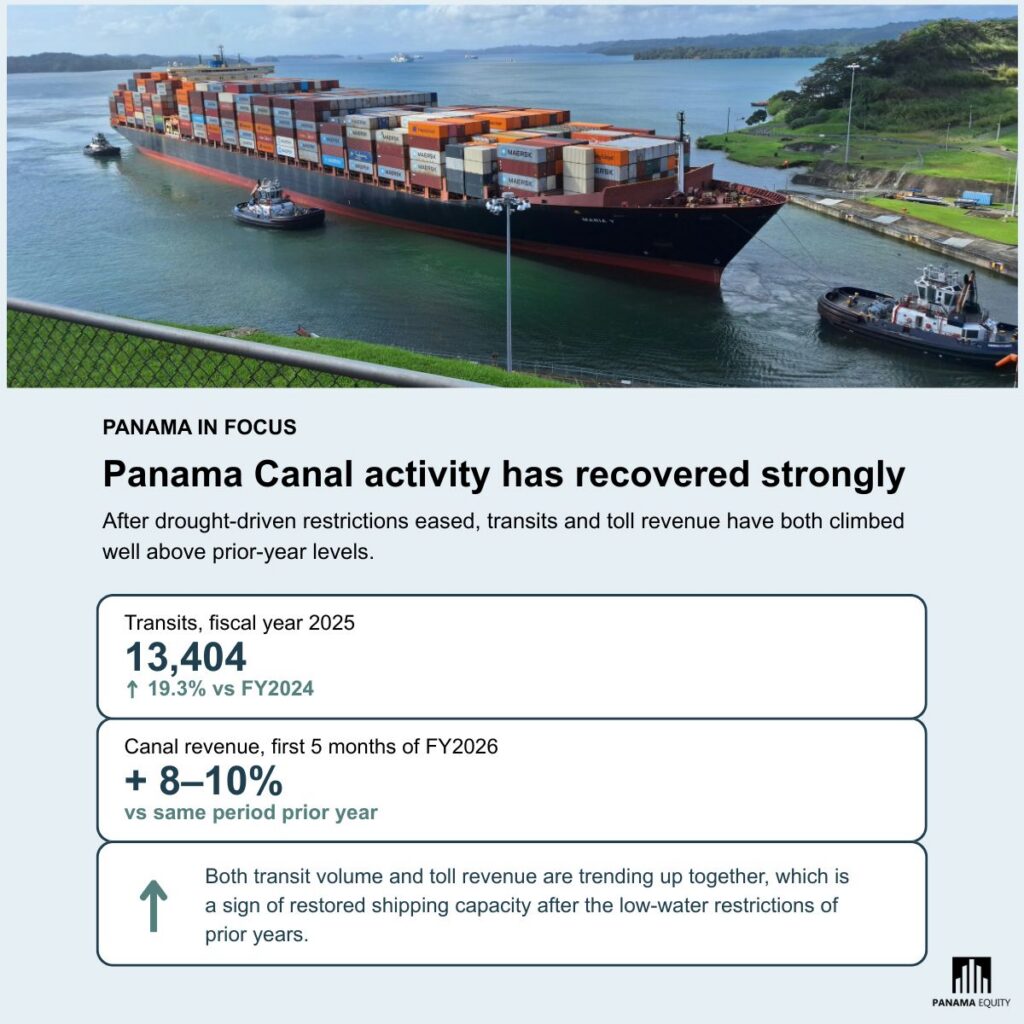
Panama’s national unemployment rate nevertheless increased from 9.7% in 2024 to 10.4% in 2025. That is an important reminder that strong tourism and foreign investment do not mean every part of the domestic economy is equally strong.
Major infrastructure projects are continuing as well. Government updates have reported substantial progress on Metro Line 3 and continued construction of the fourth bridge over the Panama Canal. These projects are more directly relevant to Panama Oeste than to the central condo market but, over time, they may change commuting patterns, connectivity and development pressure west of the city.
The most important upside factors are:
The most important risks are:
That last risk deserves more attention.
Panama has a legitimate investment story. It does not need promoters promising guaranteed appreciation, unrealistic rental yields or effortless returns.
The more the market grows, the more important transparency becomes.
Over the next 12 months, I expect new-construction prices to continue rising in projects that achieve strong presales and begin construction. If the qualified investor visa threshold gets changed to $500,000 in October, then sales in Q4 of 2026 will likely set records as investors scramble to meet any new deadlines.
I expect resale prices to move upward much stronger than they have in the last 24 months. These gains are likely to be supported by rising rents, higher replacement costs and the higher benchmarks being established by new projects.
I expect rental prices to continue increasing in the neighborhoods and price ranges where inventory is already tight, particularly furnished apartments in El Cangrejo, Avenida Balboa and Costa del Este.
But I would not describe this as a market where everything is going up.
The winners will likely remain highly specific:
The biggest factor I am watching is not a single Panama City neighborhood.
It is what is happening outside Panama.
Political uncertainty, tax changes, residency restrictions, cost-of-living pressure and declining confidence elsewhere continue pushing people here.
Panama does not need every person considering an international move.
It only needs to remain one of the most practical options for the people already looking.
Make sure to also get your free Panama Real Estate Guides to help you throughout your journey to life in Panama.
As you can see, Panama City Panama real estate is currently in a complex but interesting state. If you’d like to have a chat about what you’ve just read or believe Panama is the most practical move for you, then we’re here to help.
Our team is full of knowledgeable agents who can help you choose the best property for you or give you advice in the right direction to take.
 English
Owning a home is a keystone of wealth… both financial affluence and emotional security.
Please enter the 6-digit OTP sent to your email.
Time remaining: 05:00

